
 Society is finally waking up to the vital importance of pollinators and the irreplaceable role they play in maintaining a healthy ecosystem. However, true conservation cannot happen in a vacuum. It requires a bridge between the commercial world, modern agriculture and the natural environment.
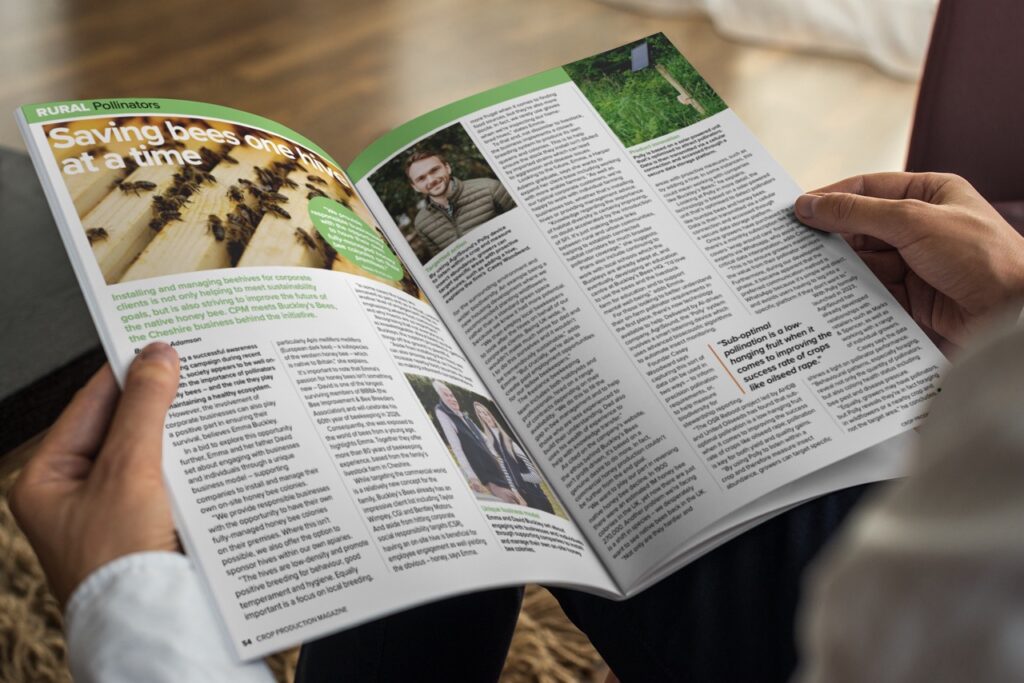
We were absolutely delighted to be featured in CPM Magazine, one of the UK’s leading arable publications, to discuss how Buckley’s Bees is partnering with responsible corporate clients and farmers to improve the future of the native British honeybee (Apis mellifera mellifera).
A Shared Lifetime of Dedication
My passion for apiculture is nothing new. It is stitched into my family’s history. My father, David, is one of the longest-surviving members of the Bee Improvement and Bee Breeders’ Association (BIBBA) and he will celebrate his 60th consecutive year of beekeeping in 2026. Growing up on our family livestock farm in Cheshire, I was exposed to the world of bees from a very young age. Together, our family offers more than 80 years of collective, hands-on beekeeping experience.
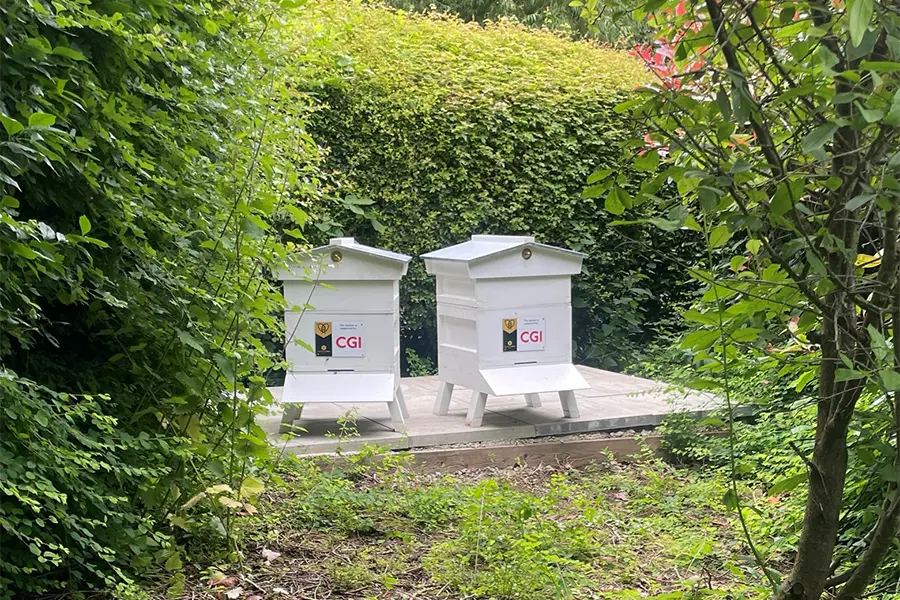
While engaging directly with the commercial sector is a relatively modern direction for us, we have been incredibly proud to welcome an impressive list of clients on board, including Taylor Wimpey, CGI and Bentley Motors.
Our unique business model provides responsible companies with the opportunity to host fully managed honeybee colonies on their premises. For businesses where on-site hives aren’t a practical option, we offer the opportunity to sponsor hives within our own rural sanctuaries.
Championing the British Dark Bee
At the very core of our work is a commitment to the native British honeybee, Apis mellifera mellifera (the European dark bee). In 1900, there were an estimated one million honeybee colonies across the UK; today, that number has dwindled to just 270,000. We desperately want to see our native bees restored to their rightful place in the British countryside.
To achieve this, we operate a strict closed-breeding system to produce our own queens and colonies. We focus on low-density apiaries that promote positive traits like excellent winter hygiene and a wonderfully calm temperament. Crucially, our stock is never diluted by imported strains, which frequently introduce aggressive behaviour and devastating disease issues. Our native bees are hardier, incredibly frugal when foraging for food and exceptionally docile. In fact, because our home-bred colonies are so gentle, we rarely ever use gloves when inspecting the hives!
Balancing the Local Ecosystem
We keep our hive density low purposefully. As registered members of the British Beekeepers Association (BBKA) and BIBBA, our work supports scientific studies focused on holistic pollinator health. We always make informed considerations for the surrounding environment to ensure our honeybees exist in perfect harmony with native wild pollinators, rather than crowding them out.
Our motivation has never been profit-driven and commercial honey production is furthest from our minds. We are driven by a genuine desire to make a lasting ecological difference and to create meaningful green employment.
Because we manage hives for clients on a UK-wide scale, it would be impossible – and entirely unsustainable – for Dad and me to tend to them all ourselves. Instead, we employ a wonderful network of local freelance beekeepers, including both passionate hobbyists and professionals. This allows us to inject funding back into the beekeeping community, provide paid employment and help less experienced beekeepers build their practical skills under Dad’s mentorship.
Connecting the Rural and the Urban through Tech
Looking ahead, my goal is to expand our work deeper into the agricultural sector. With the positive momentum of the Sustainable Farming Incentive (SFI), knowledge surrounding habitat diversity on British farms is improving rapidly. We are eager to work with more arable farmers to help connect the dots between rural and urban habitats.
Exciting advancements in agricultural technology are also making it easier to understand our landscapes. As highlighted in our feature with CPM, we are incredibly interested in the work being done by AI-driven companies like AgriSound. Their ‘Polly’ system uses smart listening devices and advanced bioacoustic algorithms to monitor insect abundance. Data like this allows growers to identify sub-optimal pollination zones in crops like oilseed rape, giving them the precise insights needed to introduce targeted measures—such as partnering with Buckley’s Bees to introduce a managed hive to optimise crop yield and quality.
Looking to the Future
Our ultimate vision is to cultivate an appreciation for nature that spans generations. We will continue our vital work with local schools and our long-term dream is to establish a dedicated education and well-being centre right here at Buckley’s Bees HQ, using our farm and our bees to support education and mental well-being.
Reversing the decline of our native pollinators is a massive journey, but by working together—industry, agriculture and beekeepers alike—we can secure a vibrant, blossom-rich future for the British countryside.
Bring Sustainability to Life
Whether you run a corporate office, manage an independent estate, or look after an arable farm, you can play a direct, hands-on role in safeguarding our native pollinators. Let our expert team handle the details while your organisation reaps the rewards of true ecological stewardship.
Discover Our Corporate and Farm Hive Packages or get in touch with our Cheshire team today to find out how you can get involved.

 Sustainability is no longer a choice; it is an absolute necessity. When large-scale organisations realise that their environmental footprint involves actively giving back to the land, incredible things happen.