
 I have loved bees for as long as I can remember. My dad has been a beekeeper for over 50 years, so I was fully immersed in the craft from a very young age. In fact, by the time I was just four years old, I was running around the yard in my very own mini beekeeping suit!
That early passion never faded. After studying at Harper Adams University and working at a senior level in a global fleet management company, I spent some time travelling in New Zealand. It was there, while writing down ideas of what I wanted to achieve next, that the spark truly hit me. My dad was starting to retire and had reduced his hives to about ten. The moment I landed back in the UK, I told him: “I’ve had a great business idea—we need more bees.”
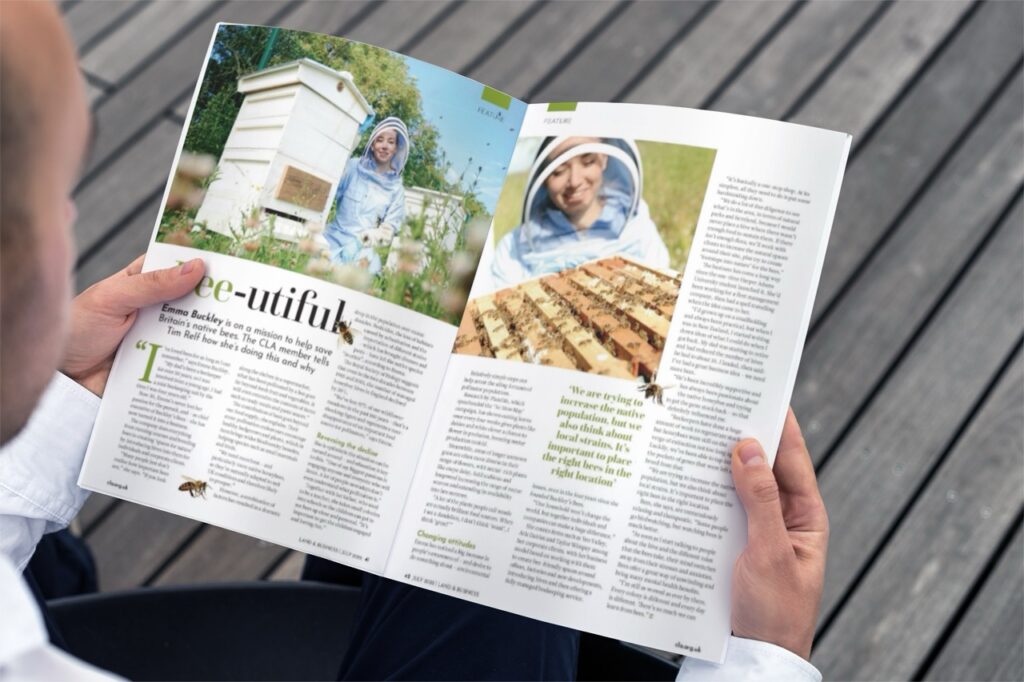
He has been my biggest supporter ever since. Dad has always been incredibly passionate about the native honeybee and reclaiming our historic gene stock. We were absolutely delighted to share this journey recently with the Country Land and Business Association (CLA), exploring how we are turning that lifelong family devotion into a nationwide movement to protect our native pollinators.
Our Core Aims
- Sustainably reverse the decline of the native honeybee population in the UK.
- Raise the profile and importance of the honeybee within the wider ecosystem.
- Enhance the viability and success of natural pollination and other wild pollinators.
- Holistically maximise and balance the environment, habitat and health of the bees.
- Create engagement and green employment opportunities.
- Educate people and encourage future generations of traditional beekeepers.
A Native Species in Crisis
Many people simply do not realise how profoundly important bees are to our daily lives. If you look along the shelves of your local supermarket, the items that rely on bee pollination extend far beyond fresh fruit and vegetables. Their work directly impacts the ingredients inside everyday essentials like ready meals and pasta sauces. Beyond our food supply, their cross-pollination endeavours encourage healthy, thick hedgerows and wild flora, which in turn provides vital habitats and food for small mammals and birds.
We desperately need more bees – and particularly more native honeybees (Apis mellifera mellifera). Because they are naturally adapted to suit unpredictable British weather conditions, they are far more resilient and likely to prosper.
Tragically, our native species has been pushed into a quiet crisis. A devastating combination of pesticides, urbanisation leading to severe habitat loss and the heavy importation of foreign strains—which introduces aggressive traits and exotic diseases—has caused populations to plummet. The Royal Society of Biology suggests that between 1985 and 2005 alone, the number of managed honeybee hives in England declined by 50%. Even more shocking is that the UK has lost 97% of its wildflower meadows over the past 100 years, representing a near-disappearance of the primary food source for our pollinators.
Simple Steps to Arrest the Decline
Reversing this trend does not always require monumental changes; relatively simple actions can make a massive difference. For instance, research from our peers at Plantlife has shown that taking part in initiatives like ‘No Mow May’ or simply cutting lawns just once every four weeks gives low-growing plants like dandelions, daisies and white clover a chance to flower in profusion. This small shift can boost local nectar production tenfold.
Leaving areas of longer, unmown grass allows nectar-rich plants like oxeye daisy, field scabious and knapweed to flourish, extending food availability right into the late summer. A lot of the plants people traditionally call weeds are actually magnificent food sources – after all, weeds are just plants that are in the wrong place. When I see a dandelion popping up through the grass, I don’t think “weed” – I think, “Brilliant, a great meal for the bees!”
Partnering with Responsible Industry
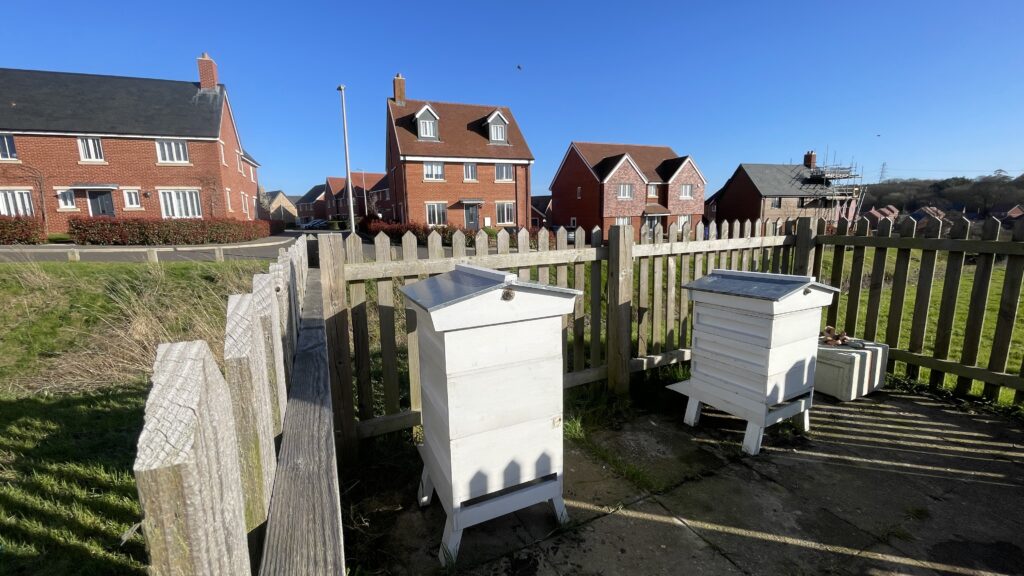
Over the years, we have noticed a beautiful shift in public awareness and a genuine desire from businesses to take environmental action. Today, Buckley’s Bees works alongside exceptional corporate clients like Yeo Valley, Arla Dairies and Taylor Wimpey to transform corporate spaces into thriving sanctuaries for nature.
Our business model acts as a fully managed, one-stop shop. For many organisations, all they need to do is provide a flat piece of hardstanding ground on their site. From there, we handle the rest. However, because we are strictly registered members of the British Beekeepers Association (BBKA) and the Bee Improvement and Bee Breeders’ Association (BIBBA), our work is deeply rooted in ecological care:
- Rigorous Due Diligence: We never blindly drop a hive into a location. We carefully assess local parks, green spaces and farmland to ensure there is an abundance of foraging material available so our honeybees never outcompete local wild pollinators.
- Habitat Creation: If a site lacks sufficient flora, we collaborate directly with the client to seed wild areas, creating seamless “footsteps into nature” for the bees.
- Localised Breeding: Honeybees were on the verge of extinction not too long ago. By tapping into the remaining pockets of native genes, we selectively breed our own queens and colonies for gentle, hygienic and hardy traits. We always prioritise placing the right local strains in the right locations.
The Therapeutic Power of the Hive
Beyond the immense environmental benefits, working with bees offers incredible rewards for human wellbeing. Watching a colony at work is a tremendously relaxing and deeply therapeutic experience.
Whenever we run employee engagement days or beekeeping courses, I watch people’s mindsets shift instantly. The moment you start learning about the complex social structures, the fluid roles and the collective teamwork taking place inside the hive, your mind switches completely away from daily corporate stresses and anxieties. It is a wonderful way to unwind and brings immense mental health benefits to corporate teams.
Our motivation at Buckley’s Bees has never been driven by commercial profit, but by a passionate, lifelong desire to safeguard the British countryside. Every colony is beautifully unique, every single day on the farm is different and I am still just as wowed by these incredible creatures as I was when I was a four-year-old in a miniature bee suit.
Create a Space for Nature at Your Work
Whether you are a landowner looking to enhance biodiversity or a corporate business aiming to deliver on meaningful sustainability targets, we would love to help you make a difference. Let our UK-wide team of expert freelance beekeepers manage the hives while your staff enjoy an infectious, unforgettable connection to the natural world.
Explore Our Managed Hive Services or get in touch with our team today to discover how your organisation can help save the British bee.

